
Few things rattle a homeowner like hearing the sewer line has a problem. The first picture that comes to mind is usually a backhoe, a torn up lawn, and a driveway in pieces.
Plenty of people ask about another approach. Sewer lining is a trenchless method that adds a new lining inside the existing pipe instead of removing it, and it’s one of the services covered under sewer lining and replacement in Tacoma. Whether it makes sense for a particular home depends on the pipe itself.
This post covers what lining is, how it differs from the traditional dig, and what to understand before deciding. It also covers the questions worth asking along the way.
What Is Sewer Lining and How Is It Different From Digging a Trench?
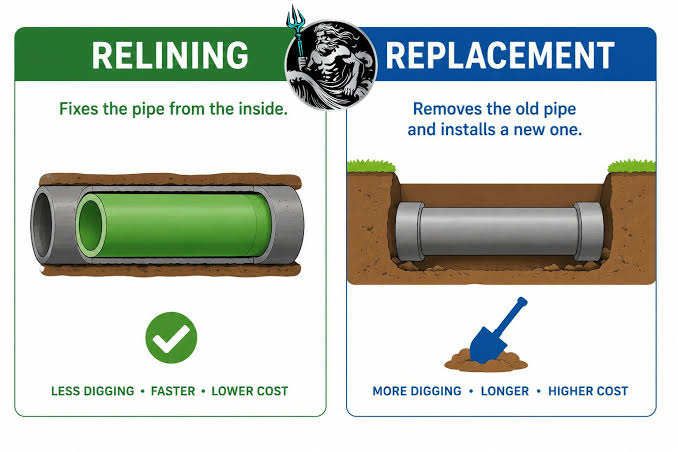
Sewer lining places a new lining inside an existing pipe instead of removing that pipe. Traditional replacement opens the ground along the line to swap the old pipe for new. Both aim to restore a working sewer line, but they treat the yard and the old pipe very differently.
A Pipe Within a Pipe
The easiest way to picture lining is a pipe within a pipe. The old line stays where it is, and the new lining forms a fresh inner surface. Cured in place lining is the type involved here, and it’s trenchless, meaning it doesn’t begin with a long open trench.
Why the Traditional Dig Worries People
The traditional approach is what most people imagine, and it’s the reason the lawn is usually the first worry. How much of the yard it affects depends on where the line runs.
Does the Condition of the Sewer Line Decide Whether Lining Is Possible?
A lining depends on the old pipe underneath it. If the existing line is mostly intact, lining can be a reasonable option to look at. If the pipe has collapsed, shifted, or lost its shape, there may be nothing solid for a lining to rest against. The pipe’s condition shapes every choice that follows.
Cracks, Roots, and Shifted Sections
Tree roots, wet soil, and ground that shifts over time can crack a pipe, open a joint, or push a section out of line. How far the damage has gone is what a professional looks at first.
Why Not Every Line Is a Fit
Some lines simply aren’t candidates for lining. A pipe that has fully collapsed or a section that has dropped out of alignment may need a different plan.
Does an Inspection Come Before Choosing Lining or Digging?
Yes, an inspection usually comes first. A professional needs to see inside the line before recommending anything, because the right choice depends on what’s actually down there. Guessing from symptoms alone, like slow drains or a soggy patch in the yard, can point toward the wrong fix.
Symptoms Don’t Tell the Whole Story
Repeated backups, gurgling, and wet spots in the lawn all hint at a sewer problem. They don’t explain what kind of problem it is. A root intrusion, a cracked section, and a collapsed pipe can look alike from the surface.
What Homeowners Can Ask
Ask what the inspection found, where the trouble sits along the line, and why a particular approach is being recommended. A clear explanation should make sense without any plumbing knowledge.
What Does Each Option Mean for the Yard and Driveway?
Traditional replacement opens the ground along the path of the line, so lawns, plants, and sometimes driveways or walkways are affected. Lining is trenchless, so it doesn’t begin with a long open trench, though some digging can still be involved. What that means for a specific yard depends on the line.
Lawns, Landscaping, and Trees
Established beds and mature trees are familiar sights around Tacoma homes, and they’re often what homeowners worry about most. The route of the line relative to those features matters. It’s fair to ask where any digging would happen before work is planned.
Driveways, Walkways, and Steep Lots
A line running under a driveway or along a sloped lot raises its own questions. Steep terrain, which shows up in parts of Tacoma, can change how a site is approached. Any recommendation should spell out what would be disturbed and who handles putting it back.
A Good Sewer Decision Starts With Knowing What Is Inside the Pipe
Lining and digging are different ways to deal with a damaged sewer line, and neither fits every home. The condition of the pipe, what an inspection finds, and where the line runs under the yard all shape the answer. Homeowners who understand that going in are well placed to ask good questions.
Anyone who gets a recommendation they’re unsure about can ask about a free second opinion before deciding. A calm look at the facts beats a rushed choice in either direction.
760 107th St S, Tacoma, WA 98444
2534998773