
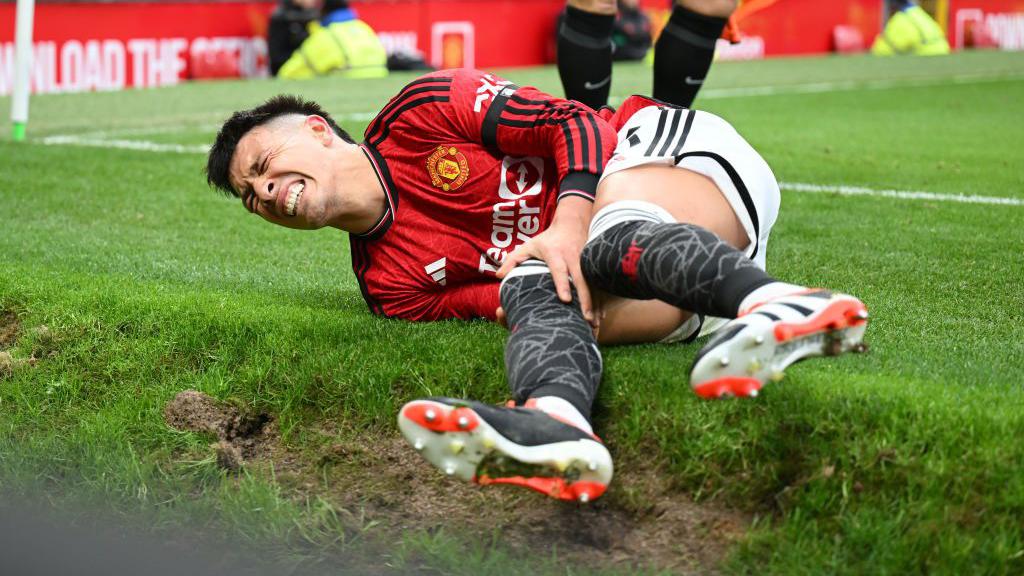
In a league where one or two players can tilt both tactics and odds, injury and suspension news is the fastest-moving information that serious bettors can exploit or be punished by. The real edge does not come from seeing a headline first, but from understanding how much that absence truly changes win probability, totals, or specific markets before the line fully adjusts.
Why Injury and Suspension News Moves Markets So Aggressively
Bookmakers build opening lines from team strength, form and historical performance, but injury and suspension updates force them to recalculate those assumptions in real time. Analytical pieces on betting markets emphasise that when a key player is ruled out, sportsbooks typically shorten odds on the opponent and lengthen odds on the affected team, sometimes producing sharp line moves if the player is central to their side’s attack or defence. At the same time, public perception often amplifies these moves: casual bettors tend to overreact to the loss of star names, while professional bettors look for value in the over‑correction by backing the “weakened” side if the adjustment exceeds what the absence genuinely warrants. For a serious bettor, the cause of market volatility is the information shock; the outcome is rapid odds movement; the impact is an opportunity to profit only if you can quantify the player’s real on‑pitch value more accurately than the crowd.
Distinguishing Signal From Noise in Premier League Player News
Not every injury or ban deserves the same weighting, and lumping them together is an easy way to misprice matches. Guides on injury and suspension impact stress that the absence of a star striker, creative midfielder or elite centre‑back usually has a larger effect on performance and odds than a minor rotation player’s knock, because key players disproportionately contribute to goals, chance creation, or structural stability. However, articles also note that even role players—full‑backs, holding midfielders, or specific press triggers—can matter more than their profile suggests if the squad lacks depth in that position, whereas losing one winger in a deep attacking unit may be marginal. The practical implication is that you need a mental depth chart and an understanding of each player’s tactical role: the cause is the specific type and uniqueness of contribution; the outcome is a different size of performance drop; the impact on betting is that some “big” news is actually small, and some quiet injuries are deeply significant.
How Bookmakers Convert Injury Information Into Odds
Understanding how bookmakers respond to news clarifies what kind of edges remain available by the time you see it. Market‑focused articles describe a typical sequence: once a star player is confirmed out, odds on their team lengthen and those on the opponent shorten, with the size of the move depending on the player’s perceived importance, timing of the news, and existing betting exposure. Public-facing analyses add that line movement also reflects sentiment: the more recognisable the player, the more casual bettors pile into the “safe” side, sometimes driving prices beyond what professional models would justify. For a serious bettor, the cause is a blend of model-based adjustment and human behaviour; the outcome is that odds might initially underreact and then potentially overshoot as sentiment kicks in; the impact is that your best moments to act are either very early (before full adjustment) or slightly later (once public overreaction creates value the other way).
A Structured Way to Read Injury and Suspension Reports
To stop news consumption from becoming emotional, you need a fixed, repeatable way to process injury and ban updates. Strategy articles on injuries and suspensions recommend assessing each case along three dimensions: player importance, timing of the news relative to kick‑off, and squad depth in that position. For Premier League 2023/24, you can formalise this by ranking players in tiers (core, important, replaceable), then asking whether the team has an adequate substitute, whether tactics can be adjusted, and whether the upcoming opponent is well‑positioned to exploit the missing piece—for example, facing a strong pressing side when your best press‑resistant midfielder is out. The cause of your final decision should be this structured evaluation rather than the headline itself; the outcome is a more consistent mapping between news and bet size; the impact is reduced tendency to overbet or underreact when the same type of story appears later in the season.
Example Table: Translating News Types Into Betting Impact
A simple table can help standardise your reaction across different categories of absences.
| News type | Likely tactical impact | Typical market impact |
| Star striker out (injury/ban) | Fewer shots, lower xG, weaker pressing from front | Odds drift against team, totals lean under |
| Key centre-back or DM out | Weaker structure, more high‑quality chances allowed | Opponent odds shorten, BTTS/overs more attractive |
| Multiple defenders/keepers missing | Disorganisation, more errors and set‑piece issues | Larger move to opponent, bigger totals adjustment |
| Rotation winger/FB absent, deep squad | Minor; shape mostly intact | Small or no move; potential overreaction by public |
Using this mapping, the cause–effect link becomes explicit: the type of absence predicts the tactical change; the outcome hints at which markets (result, totals, props) are most affected; the impact is that you can prioritise where to look for value instead of reacting uniformly to all news.
Integrating UFABET Into a News-Driven Approach
For bettors who rely heavily on team news, the way they interact with their online betting destination can either enhance or waste that information. In situations where wagers are placed via ufa168, the key analytical question is whether its live odds and props react faster, slower, or roughly in line with broader markets when significant injury or suspension news breaks. A serious bettor might track how quickly odds move on that site after official announcements—press conferences, club statements, league suspension lists—and compare that with closing lines, looking for patterns where the house lags on niche markets such as player shots, assists or cards even after the main 1X2 and totals lines have adjusted. The cause of any exploitable edge is the time gap between information release and full repricing; the outcome is that disciplined, news‑aware users can occasionally lock in favourable numbers; the impact is only positive if those bets are limited to situations where your evaluation of the player’s true value differs meaningfully from what the odds imply.
Using injury and suspension news to frame, not override, model output
In isolation, news can tempt bettors to ignore their usual analytical framework and make decisions based solely on absences. Market and strategy guides stress that injury information should modify, not replace, existing assessments built from xG, form, styles and matchups. For example, losing a forward in a team that already underperforms its xG might push you toward unders or reduced expectations, whereas losing the same profile in a side that creates chances from multiple sources may demand only a small adjustment, especially if the opponent defends poorly. Serious bettors often build this into a simple numeric tweak—adding or subtracting a small number of percentage points from the team’s implied win probability or from totals expectation based on the tier and role of the missing player—ensuring that the cause of the final edge remains the overall model with news treated as a weighted input, not as the sole driver of decisions.
Timing: Early Edges vs Late Confirmation
The market impact of news depends heavily on when it becomes public. Commentaries on soccer betting highlight that late announcements of injuries or bans just before kick‑off can trigger sudden flurries of betting and aggressive odds swings, rewarding those who anticipated the risk and punishing those who waited for confirmation. Conversely, when a player’s absence is rumoured days in advance, odds may slowly drift, reducing the value by the time team sheets make it official, although occasional reversals happen if the player proves fit and starts, briefly creating value the other way for prepared bettors. For a serious bettor, the cause is the information timeline; the outcome is differing risk/reward trade‑offs between acting early on partial information and waiting for certainty; the impact is that you should consciously decide your preferred timing strategy—whether you want to be early and small or late and more certain—rather than drifting between both without a plan.
Where casino online Behaviour Corrupts Injury-Based Discipline
News‑driven betting can be profitable, but it also encourages emotional responses—especially when a “great spot” loses despite being correctly read in terms of absences. Articles on injury impact and betting psychology warn that bettors who let frustration from such events push them into chasing losses in unrelated high‑variance games end up decoupling bankroll results from the quality of their team‑news analysis. In a broader casino online environment, that means a well‑designed approach to reading Premier League injuries and suspensions can look ineffective simply because profits are spent or reversed elsewhere without the same information edge. Keeping separate records for bets that explicitly rely on injury and suspension news allows you to see whether your interpretation of 2023/24 player availability actually improved your edges over time, so that the cause–effect relationship is preserved and adjustments are made to the strategy itself rather than lost inside general gambling volatility.
Summary
For serious Premier League bettors in 2023/24, injury and suspension news is not just noise; it is one of the main levers that moves odds and changes how teams actually play. Evidence from market and strategy analyses shows that bookmakers adjust lines quickly when key players are ruled out, that public sentiment can exaggerate these moves, and that disciplined bettors who understand each player’s tactical value and squad context can sometimes find mispriced opportunities before or after full adjustment. By structuring how you read news—ranking player importance, considering timing, integrating absences into, rather than over, your base model, and separating this edge from other gambling activity—you turn headlines about bans and injuries from emotional triggers into quantifiable inputs that enhance, rather than derail, your Premier League betting decisions.