
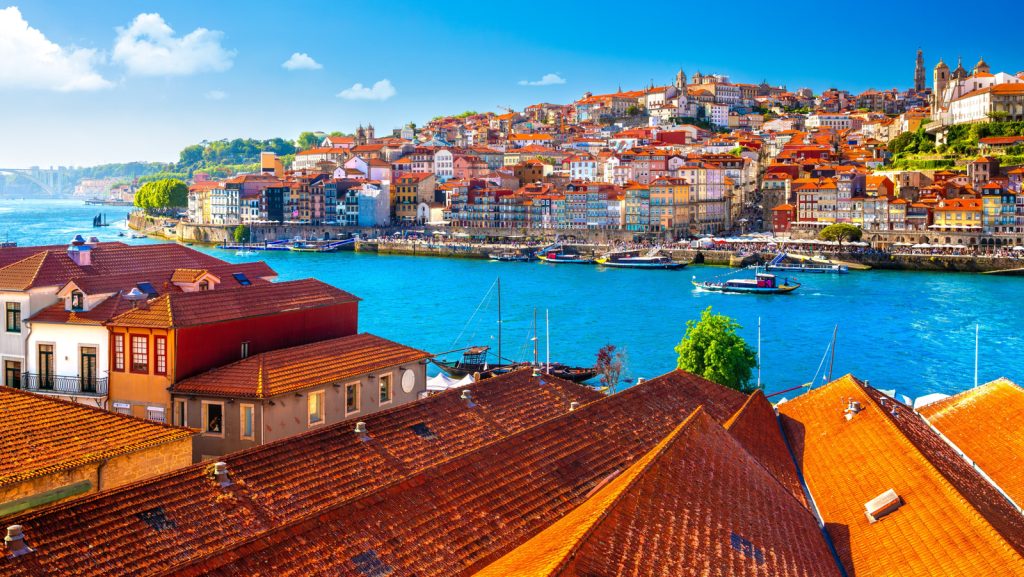
Porto is often introduced through a few familiar images: the river, the bridge, tiled facades, steep streets, and historic houses stacked along the hillside. These elements matter, but they do not fully explain why the city leaves such a strong impression. Porto is not only attractive to look at. It is a place that communicates through texture, slope, silence, routine, and contrast. Its character is not concentrated in one landmark. It is spread across streets, viewpoints, stairways, markets, and ordinary corners where the city feels most honest.
That is why Porto is best understood not as a checklist of attractions, but as a sequence of spaces that reveal how the city lives. A traveler may begin with the riverfront, continue uphill through old streets, pass local shops and quiet squares, and even encounter references from digital entertainment culture, such as adventures beyond wonderland live game, without losing sight of the main fact: Porto’s deepest value lies in the way its urban form and daily rhythm create emotional depth. To feel the city properly, one has to look beyond what is famous and pay attention to the places where its real tone becomes visible.
The Riverside Shows Porto’s Public Face
The Ribeira district is one of the first places where many visitors feel the emotional pull of Porto. The riverfront is visually strong, but its power is not only scenic. It reveals the city’s relationship with trade, labor, movement, and topography. The facades along the water may appear almost theatrical at first glance, yet the setting also tells a more practical story. Porto developed through commerce, and the river was essential to that development. The city’s form still reflects this history.
Walking along the waterfront helps a first-time visitor understand Porto’s outward-facing side. The area is active, social, and open to view. It is one of the places where the city presents itself most clearly. Yet even here, Porto avoids feeling superficial. The buildings carry visible age. The streets behind the riverfront rise quickly and pull the visitor away from the open view into a more intimate and demanding urban landscape.
This transition is important. Porto’s character is not contained at the river. The waterfront is the beginning, not the full explanation.
The Slopes and Stairways Reveal the City’s Inner Logic
To understand Porto more deeply, it is necessary to leave the flat riverside zone and move upward. The city’s steep streets and stairways are not secondary details. They are central to how Porto is experienced. The effort of climbing changes the pace of the visit and creates a more direct relationship with the built environment.
In cities with flatter layouts, movement is often smooth and predictable. Porto resists that kind of neutrality. The terrain shapes attention. One must notice where a street rises, where a staircase begins, where a wall opens onto a sudden view. This physical involvement makes the city more memorable. The visitor does not simply observe Porto. They negotiate it.
These climbs also reveal the structure of the city’s neighborhoods. Streets that seem quiet from below may open into residential areas with a different tempo. Small details become more noticeable: laundry above the alley, local cafés, stone steps worn by use, fragments of tiled walls, and viewpoints that appear almost without warning. These elements build attachment because they feel discovered rather than delivered.
Miradouros and Elevated Corners Give Porto Its Emotional Range
Porto’s elevated viewpoints matter not only because they offer wide panoramas. They help explain the city’s emotional range. From above, one can see the relation between river, bridge, rooftops, church towers, and the layered slope of the city. This perspective clarifies Porto’s structure, but it also changes the mood of the experience.
At street level, Porto can feel enclosed and dense. From above, it becomes open and legible. This alternation between compression and release is one of the reasons the city stays in memory. The viewpoints are not only scenic breaks. They are moments in which the city reorders itself in the visitor’s mind.
These elevated corners also show that Porto’s beauty is based on composition rather than perfection. The city is powerful because of how its irregular parts come together. Rooflines do not align neatly. Heights vary. Surfaces show wear. Yet from the right angle, these same features create visual coherence and depth.
Neighborhood Streets Carry the Real Tone of the City
While the riverfront and major viewpoints are essential, Porto’s truest character often appears in its neighborhood streets. These are the places where the city feels least performative. Away from the main tourist lines, Porto becomes quieter, slower, and more precise. The visitor begins to notice how local life is organized: where people stop for coffee, how balconies and windows shape the street, how shops fit into the slope, and how silence can exist even close to the center.
This is where the city becomes personal. Major landmarks create recognition, but ordinary streets create memory. A narrow lane with stone walls, a small square at the top of a climb, a residential facade catching late light — these are the places that often remain strongest in the mind after the trip ends.
Such spaces matter because Porto is a city of atmosphere as much as architecture. The urban fabric communicates through restraint. It does not need constant spectacle. Instead, it builds meaning through repetition, contrast, and continuity.
Churches, Stations, and Public Buildings Add Cultural Density
Porto also reveals its character through public and civic spaces. Churches, train stations, and older institutional buildings are not merely decorative or historical. They show the cultural density of the city. In Porto, these structures are embedded in daily movement. They are encountered while walking uphill, crossing a square, or moving between districts.
This integration matters. It means that cultural heritage is not isolated from ordinary life. A station is both a transport hub and a site of visual memory. A church is both a place of worship and a landmark in the urban rhythm. This overlap makes Porto feel continuous. History does not sit apart from the present. It remains visible inside it.
The River Across From the City Completes the Experience
To feel Porto fully, it also helps to see it from across the river. This shift in viewpoint gives the city a different kind of clarity. From the opposite bank, the layered form of Porto becomes easier to read. The houses, churches, bridge, and slope align into a single composition.
This external perspective is valuable because Porto is a city that changes depending on distance. Up close, it feels tactile and fragmented. From across the river, it becomes whole. Both experiences are necessary. Together they explain why Porto feels both intimate and monumental.
Conclusion
Porto for the soul is not defined by one famous site. It is defined by the places where the city’s true character becomes visible: the riverfront that introduces its public face, the steep streets that reveal its internal logic, the viewpoints that widen its emotional range, the neighborhood lanes that carry its real tone, and the civic spaces that connect history with present life.
What makes Porto so memorable is that its identity is not staged in a single location. It is distributed across the city and discovered through movement. The more one walks, climbs, pauses, and observes, the more Porto begins to feel less like a destination and more like a living structure with depth, memory, and soul.