
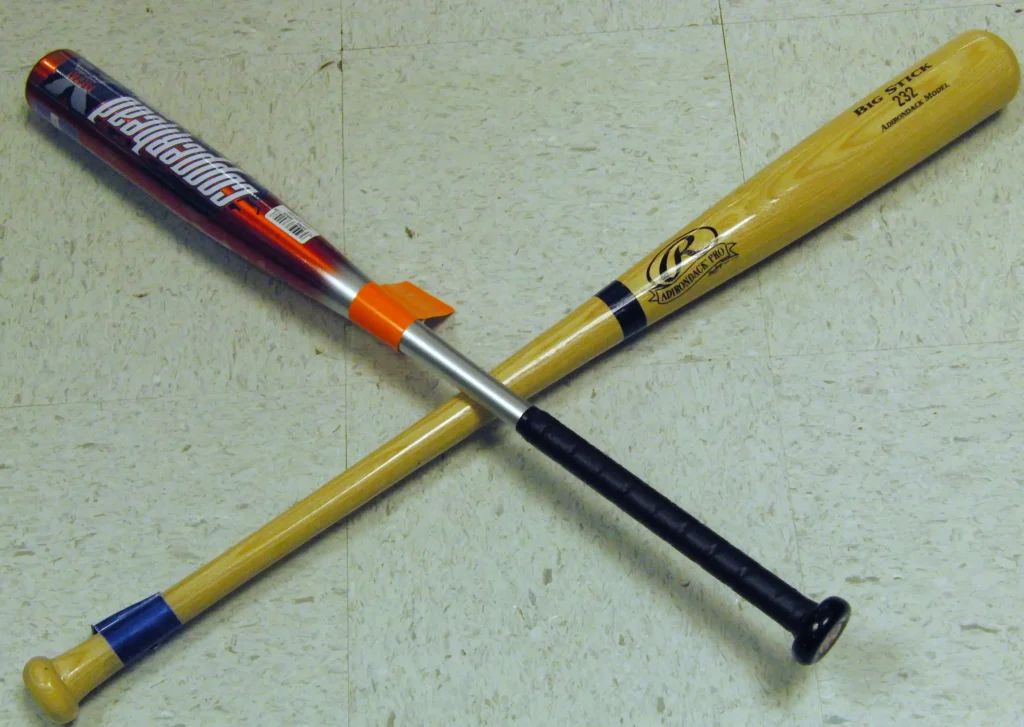
Walk into any baseball field, from a youth league park to a professional stadium, and you’ll notice something right away. The sound off the bat is not always the same. Sometimes it’s a sharp crack. Other times, it’s more of a hollow ping that echoes a bit longer than expected. That simple difference tells you almost everything about the bat being used.
Choosing between wood and aluminum bats is not just a matter of preference. It shapes how the game feels, how players develop, and even how hits behave once the ball leaves the barrel. For players, parents, and coaches trying to make sense of it all, the differences are worth understanding.
Material and Construction
At the most basic level, the distinction starts with what the bat is made of. Wood bats are typically crafted from ash, maple, or birch. Each type of wood brings its own personality. Maple tends to be dense and hard, while ash offers a bit more flexibility.
Aluminum bats, sometimes called metal or alloy bats, are engineered rather than carved. Manufacturers design them with hollow interiors and thin walls, which creates a trampoline-like effect when the ball makes contact.
That structural difference changes everything. A wood bat is solid through and through, so the ball reacts more directly to the force applied. Aluminum bats, on the other hand, can flex slightly on impact, which boosts how far the ball travels, even on less-than-perfect swings.
Performance and Power
This is where most players start to notice the gap. Aluminum bats generally produce higher exit velocities. That means the ball leaves the bat faster, often resulting in longer hits.
With wood, things feel a bit more honest. Miss the sweet spot, and you’ll know immediately. The ball might dribble off the end or die near the infield. But connect cleanly, and the reward is satisfying in a different way. There’s a purity to it that many players grow to appreciate over time.
It’s not unusual to hear debates about which type helps hitters more. Aluminum bats can boost confidence, especially for younger players still refining their swing. Wood bats, though, tend to demand better mechanics. They don’t give you much room to cheat.
Durability and Cost Over Time
Here’s where reality sets in for a lot of players. Wood bats break. Sometimes it happens on a bad swing. Sometimes it’s just bad luck, like hitting the ball on the wrong part of the grain.
Aluminum bats rarely break in the same way. They might dent or lose performance after heavy use, but they won’t shatter mid-swing. That durability makes them appealing, especially in leagues where players hit frequently.
That said, aluminum bats usually come with a higher upfront cost. A single bat can last a season or more, but the price tag can still be tough to swallow. Wood bats are cheaper individually, yet replacing them adds up if you go through several in a short period.
Feel and Feedback
Ask experienced hitters what they prefer, and many will talk about feel before anything else. Wood bats provide immediate feedback. You can tell exactly where the ball made contact, even with your eyes closed.
Aluminum bats soften that feedback a bit. The vibration is less intense, and mishits do not sting as much. For beginners, that can be a good thing. It keeps the experience positive and encourages more swings.
Still, there’s something about the connection between player and bat when using wood. It feels more direct. Some players say it helps them stay more aware of their mechanics, almost like the bat is teaching them as they go.
League Rules and Player Development
Not every player gets to choose freely. Different leagues have different rules, and those rules often guide what type of bat is used.
At the professional level, including organizations like Major League Baseball, wood bats are the standard. That tradition carries weight. It emphasizes skill, consistency, and a deeper understanding of hitting.
Youth and amateur leagues often lean toward aluminum bats. The increased performance helps keep games exciting and gives developing players a better chance to make solid contact.
There’s an interesting transition that happens as players move up. Many who grow up using aluminum bats eventually switch to wood. That adjustment period can be challenging, especially when timing and contact become less forgiving.
Safety Considerations
This topic does not always get as much attention, but it matters. Aluminum bats can send the ball back into the field at higher speeds. That can reduce reaction time for pitchers and infielders.
Wood bats tend to produce slightly slower exit speeds, which can give fielders an extra fraction of a second to react. It may not sound like much, but in a fast-paced game, it can make a difference.
On the flip side, broken wood bats can pose their own risks. A shattered bat can send pieces flying, which is why awareness and proper bat selection are important.
Which One Should You Choose?
The answer depends on where you are in your baseball journey. Younger players often benefit from aluminum bats because they make the game more approachable. There’s more room for error, and that can build confidence early on.
As skills improve, switching to wood can sharpen technique. It forces hitters to focus on timing, balance, and barrel control. Some players even train with wood bats while still competing with aluminum, just to get the best of both worlds.
For casual players, it might come down to preference. Some enjoy the familiar ping of aluminum. Others prefer the classic crack of wood and the challenge that comes with it.
At the end of the day, baseball bats are more than just equipment. They shape how the game feels in your hands, how you approach each swing, and how you grow as a player.
Finding What Fits Your Needs
The difference between wood and aluminum bats is not just about materials. It touches nearly every part of the game, from performance and durability to player development and safety. Each type has its place, and neither is inherently better across all situations.
If you’ve ever stood in the batter’s box, waiting for a pitch, you know that moment is about more than just hitting the ball. It’s about timing, instinct, and trust in your equipment. Whether that bat is wood or aluminum, what matters most is how it fits your game and helps you move forward.