
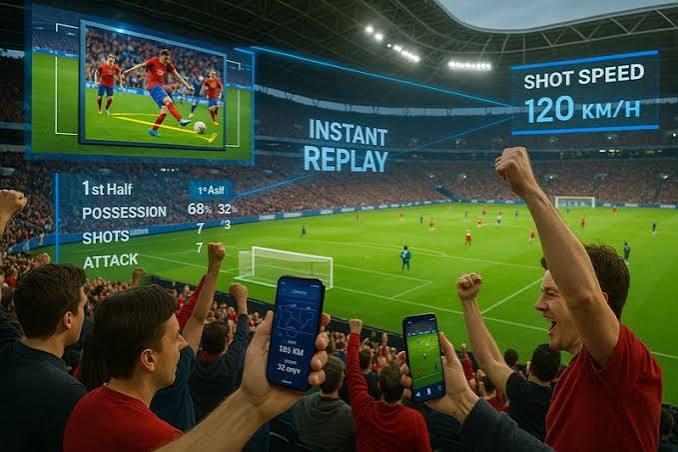
A football match used to ask for your full attention because there was not much else competing with it. You watched the game, listened to the commentary and maybe checked another score at half-time if somebody happened to mention it. Matchday is much messier now, especially if you are watching from a laptop or desktop. The football is still the main event, but the browser has become the place where almost everything around it lives.
One tab might have the live score and line-ups, another has the league table, and a third is sitting on a statistics page because you want to check whether the midfielder who keeps giving the ball away is actually having as bad a game as it feels. There may be social media open, a group chat running somewhere, and another page tracking a second football match that started at the same time. For fans who also follow sports betting, the browser often includes that too, so football fans looking at Betway’s Botswana betting platform may have that page open in the middle of the same matchday clutter. It does not feel separate from the rest of the experience. It is simply another tab among scores, team news, commentary and everything else people check while the game is going on.
The browser fits the way football is followed now
Football is perfect for this kind of multitasking because a match is full of small gaps. The ball goes out, a player is down, a substitution takes a minute, or there is a long VAR check and everybody reaches for another screen. Those moments used to be dead time. Now they are when fans check another fixture, look at possession numbers, read reactions or see what happened in a match they are not watching.
A browser handles that better than people sometimes give it credit for. On a laptop, several pages can stay open at once without forcing the user to close one thing to look at another. A live score can sit in one tab, football news in another and a sports betting page in a third. The technology is not flashy, but it makes the whole matchday easier to follow.
That is especially noticeable on weekends when several leagues overlap. A supporter might be watching one football match properly but still care about two or three others because of the table, a fantasy team or simply because the results affect their club. The browser turns all of that into one working space rather than a collection of separate apps.
A match no longer exists on its own
The biggest change is probably not the technology itself but the amount of information fans now expect to have around the game. Watching football used to be mostly about what was happening on the pitch. Now people want the context as well.
Before kick-off, they check the starting eleven. During the game, they may look at shots, corners, possession or expected goals. At half-time, they might compare the first half with the previous match or see whether another team in the league is winning. After the final whistle, attention shifts almost immediately to reaction, interviews and the table.
For people interested in sports betting, the same flow of information matters. If someone wants to place a sports bet, they are rarely doing it without looking at anything else. They may have checked form, injuries, recent results or how the match is developing. The browser makes that easy because the information is already there in nearby tabs.
It also changes the feeling of a sports bet during a live game. The decision is sitting inside the matchday rather than apart from it. A fan can be watching the football, check how the game is changing and then move back to the main screen without really breaking the flow.
Bigger screens still make a difference
Phones are more convenient when people are travelling or away from home, but a bigger screen still has an obvious advantage when there is a lot happening at once. On a desktop or laptop, the user can keep several things visible without feeling as though each new page has replaced the previous one.
That matters during a busy football matchday. If one match is on television, the laptop can handle everything else. Fans can keep a league table open, follow another fixture and check football news without losing track of the main game.
The difference becomes even clearer for somebody comparing information before they place a sports bet. A phone can do all of that, but the browser gives more room to move around. Several pages can stay open, stats are easier to compare and there is less jumping backwards and forwards.
Betway fits into that wider pattern as one of the platforms fans may open alongside all the other matchday information. The browser makes it easy for sports betting to sit next to football coverage rather than taking over the whole screen.
Technology made all of this connect
None of this would work particularly well if websites still behaved the way they did years ago. Live pages used to refresh badly, stats could take ages to update and opening too many tabs could slow everything down.
Browsers are better now, and so are the sites built for them. Live data updates more smoothly, video and statistics can run at the same time, and users can keep several football pages open without much thought. That improvement in technology has made the browser feel less like a place you visit and more like a workspace that stays open for the whole matchday.
The result is that football fans barely notice how much they are using it. They open the laptop before kick-off, build up a row of tabs and leave most of them there until the last game finishes.
The dashboard is different for every fan
Not everybody uses the browser in exactly the same way, which is probably why the matchday dashboard idea works so well. One person cares about statistics, another wants the table, and somebody else just wants live scores from every match in the league.
That is also why the desktop has survived despite the rise of mobile apps. The laptop is not necessarily better at one particular thing. It is useful because it can hold several parts of matchday at once.
The football remains the centre of everything, but the browser now fills in the space around it. Scores, stats, news, sports betting, chats and second matches all end up sharing the same screen. Fans may not call it a dashboard, but that is basically what they have built.
A modern football match is no longer just ninety minutes on television. It is ninety minutes surrounded by information, reaction and constant checking. The browser has become the place where all of that comes together, and on a busy matchday, it can feel almost as important as the screen showing the game itself.